
When homeowners picture a beautiful custom deck, they often assume composite decking is the only option.
Composite products such as Trex offer excellent durability and low-maintenance performance, but they are not the only way to create an attractive, well-finished outdoor living space. With thoughtful design, proper construction and careful attention to detail, a pressure-treated deck can look every bit as polished.
A recent Quinlan’s Construction Services project is a great example.
Creating More Usable Outdoor Space
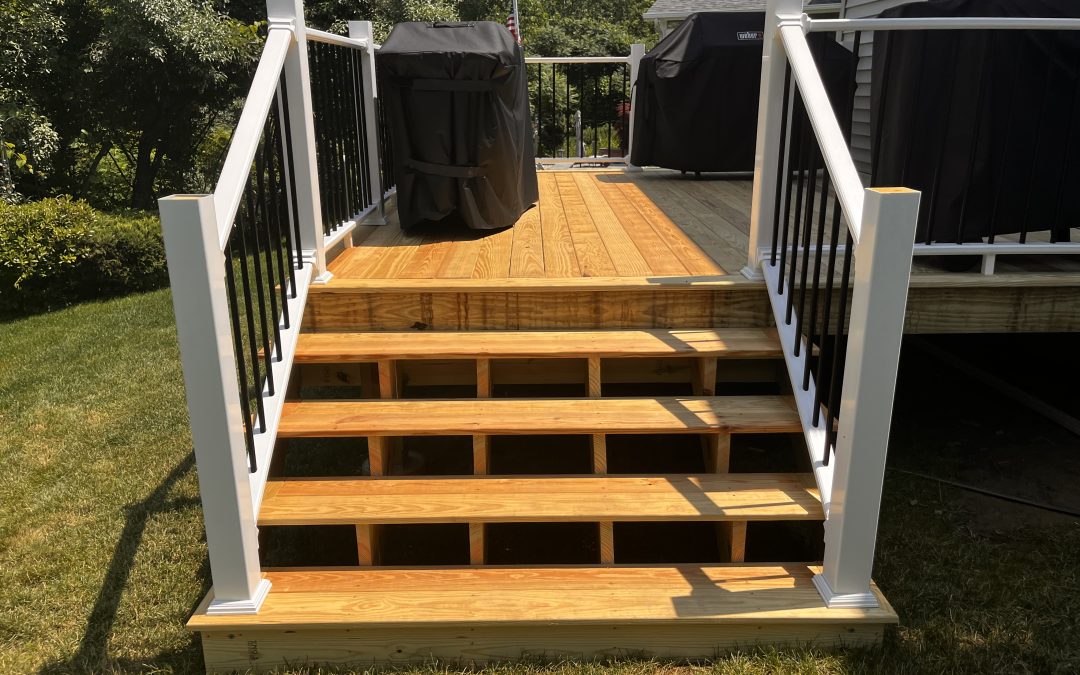
The existing deck no longer provided the space or function the homeowners wanted. As part of the project, we expanded the deck by two feet in both width and depth.
That may not sound like a dramatic change on paper, but even a modest expansion can make a meaningful difference. The additional space gave the homeowners more room to move comfortably, arrange outdoor furniture, and use the deck for relaxing and entertaining.
The goal was not simply to make the deck larger. It was to create a more useful extension of the home.
Pressure-Treated Does Not Have to Mean Basic
Pressure-treated lumber is sometimes associated with basic, builder-grade decks. In reality, the finished appearance has far more to do with the design and workmanship than the material alone.
For this project, we used picture-framed pressure-treated decking to create a cleaner edge and more intentional appearance. The new railing system combined white posts with black aluminum balusters, giving the deck a modern, timeless look that complements the home.
These finishing details helped the pressure-treated deck feel custom rather than ordinary.
The Most Important Work Is Underneath
The surface of a deck receives most of the attention, but the structure underneath determines how the deck feels and performs.
A beautiful deck should also feel stable and solid every time someone walks across it.
For this project, the structural work included:
- Upgraded framing with proper blocking throughout the deck
- Simpson Strong-Tie tension ties for added lateral stability
- Framing and connections designed to meet current building requirements
- FastenMaster Liquid Flash applied to the tops of the joists and stair stringers
- Moisture protection intended to help extend the useful life of the framing
Blocking helps create a stiffer structure and reduces movement between framing members. Tension ties help strengthen the connection between the deck and the home. Moisture protection on joists and stair stringers helps prevent water from sitting directly on vulnerable framing surfaces.
These details may not be obvious in the finished photos, but they are essential to the long-term performance of the deck.
Good Framing Matters With Every Decking Material
At Quinlan’s Construction Services, we believe the framing underneath should receive the same careful attention whether the finished surface is pressure-treated lumber or composite decking.
Composite decking does not compensate for inadequate footings, poor beam sizing, incorrect joist spacing or weak connections. In the same way, pressure-treated decking does not have to feel like a lower-quality choice when it is installed over a properly designed and constructed frame.
The material homeowners see is only one part of the project.
The structure, moisture management, connections and installation details all contribute to how the deck performs over time.
Pressure-Treated or Composite: Which Is Right for You?
Both pressure-treated lumber and composite decking can be strong options. The right choice depends on the homeowner’s priorities, budget and expectations for maintenance.
Pressure-treated decking may appeal to homeowners who prefer the look of real wood or want to direct more of their project budget toward size, structure and custom details. It will require ongoing maintenance, including cleaning and periodic sealing, staining or painting.
Composite decking generally requires less routine maintenance and is available in a wide range of colors and finishes. It usually carries a higher initial material cost.
Neither option is automatically right for every project.
A productive conversation should consider:
- The homeowner’s budget
- Desired appearance
- Maintenance expectations
- Planned use of the deck
- Overall project size
- Structural needs
- Expected length of ownership
Craftsmanship Is Always Part of the Investment
Sometimes the best investment is not choosing the most expensive finish material.
It is investing in a well-planned design, a properly constructed frame and craftsmanship that gives the finished deck a solid, polished feel.
This project shows that pressure-treated decking can be practical, attractive and completely custom when the details are handled with care.
Considering a new deck or an expansion of your existing outdoor space? Contact Quinlan’s Construction Services to begin the conversation.